Sunday, March 30, 2014

MORNING GLORY!

My morning walks are a source of information and learning for me. I go to the nearby Government City Forest which is also a Nursery which has a nice walking path. The path is 2.4 kms long and winds its way in an interesting manner. The bends and turns are irregular, so the path retains a charm of its own. The area is forested with a large number of trees.
At the entrance to the Nursery sit a number of fruit vendors, most prominent is the nariyal walla. I feel very happy to see the awareness amongst the walkers to health foods and fruits. A lot of people buy their days supply of fruit on the way out. A number of walkers drink coconut water everyday.
Walkers are of all types, shapes and age. This park is situated on the Mehrauli Badarpur Road and is close to Sainik Farms, Saket, Neb Sarai and Said ul ajaib. The walkers come from all these places.

 The pattern of the groups are interesting. Young girls walk in a group of two or three, young men are in pairs, ladies in the age group of 30 to 40 years are usually in a group of four, older men walk in a cluster, then there are couples who would be in the slightly older age bracket and  then there are retired senior citizens who need help in walking, they come with attendants. Then there are singletons, who are usually the serious walkers, whose sole purpose is to walk at their own speed. They do not want to socialize and do not want to walk at the speed of someone else.
Yoga in the park
Younger men in two's usually jog, younger girls walk and talk and giggle. Older men are the loudest, there is a lot of politics discussed and there is a lot of leg pulling also. They really enjoy their walk the most. The middle aged women discuss their kids and the school and also extra curricular activities for the children.The older couples are the quietest. They just trudge along together, there is no talk, no laugh and no smile too. It appears as though they are just completing a task given to them. I do wish people would retain their charm, conversation skills, and companionship always. Wonder why people start taking each other for granted!
Looking for a bench
I usually take two rounds of the path and then look for a bench to sit down upon. Benches are arranged away from the walking path, in a square. While looking for an empty bench I cross a lot of groups. There is a group of young men who practice yoga. Then there is the laughter club, where after some bits of exercise and a lot of clapping, people burst out into artificial laughter. After the group laughter is finished and they disperse, I have noticed many from the group walk away with the perpetual frown that is the normal look on the face of most Indian men. A happy, relaxed, smiling face I have noticed is a rare sight.
Then there are those who bring food for the stray dogs as well as for the ants and the birds. They come with bags full of bread or roti and also bajra grain. There is an oldish lady who is usually surrounded by dogs. She talks with them and pets them and then feeds them. One person does the Surya namaskar and then feeds the ants.
One day as I sat on the bench I heard, "Ma, take off your shoes and walk on the grass. It is very beneficial for health." The mother took off her shoes and then the mother and son walked together on the damp grass. The young man's little daughter was also being told, " Beta, one must always look after one's parents". It was nice to hear these words. This is how traditions are passed on and children are trained by example.
This morning I heard two ladies discussing a proposal for opening of a creche and conducting Music classes at their house.
People
Morning walks provide me with fresh air, chirping of birds, and also lessons on people and their behavior, their interaction and also how almost everyone thinks that they are very experienced and therefore  competent to dish out their free advice to all and sundry on exercise and also on what health foods must be consumed!
One day as I entered the walking path I heard, "Come ma'm please have a cup of tea." There was a group of people who were serving tea and biscuits at the entrance to all the walkers. Satish said,"We all see each other everyday, so we thought that let us share tea and introduce ourselves". They had the tea with sugar and also without sugar! I spent a pleasant five minutes with them and had a nice hot cup of unwanted tea. The result is that  now we at least smile at each other on the morning walk path.

Once I went for a walk in the evening. The trees were full of extremely noisy birds, who were all back after the day and were settling down for the night. The noise was just too much. The decibel was very high and I think there was a lot of discussion going on about the day!
In the mornings the birds leave their nest after a good nights rest so one hears the melodious notes of the cuckoo bird, but the evenings are just a cacophony of noise.

My walking path in Nashua
I visit London and Nashua every year to be with my children. I walk there too. The difference is that in both these places the people are generally jogging. All the people that one passes on the path  always wish each other Good Morning and wave. Walking and jogging is always done after a warm up, which is not so in Delhi. 
A morning walk is not just a physical fitness walk for me, it is a social and educational walk, which starts my day with the mild sun, the cool fresh breeze and the cuckoo singing its melodious song. It is a beautiful  start of a new day.
Walking Park in London


Thursday, February 20, 2014

24 YEARS OF VARSHAVAAS-SHRAWASTI!


SAHET
 Shrawasti, was the capital of the Kosala Kingdom during the sixth century BC. It was then called Shavathhi.This place in North East UP, is on the foothills of the Himalayas near the river Rapti,  which was called Achiravati during the time of the Buddha. The Buddha spent 24 monsoon months( varshavaas) here. Kapilvastu and Vaishali were vassals of the Kosala Kingdom. Raja Prasenjit or Pasenadi was the King over here during the time of the Buddha.
It is said that a prosperous Shreshti named Sudatta also called "Anath pindika" because of his generosity to orphans had visited Rajgriha where he heard the discourse of Buddha. He wanted Buddha to visit Shrawasti and therefore wanted to buy a large garden for Buddha's stay and to construct a Vihara for his followers. The garden selected was very huge and was owned by  Prince Jeta, who did not wish to part with the garden. He therefore told Sudatta that if he covered the garden with  gold coins the garden would be given to him. It is said that Sudatta covered the place with 108 million gold pieces and donated the place for use of the Buddha. Today this is the place where a number of ruins of viharas and temples have been found. It is now called Sahet.
THE PLACE WHERE BUDDHA WALKED
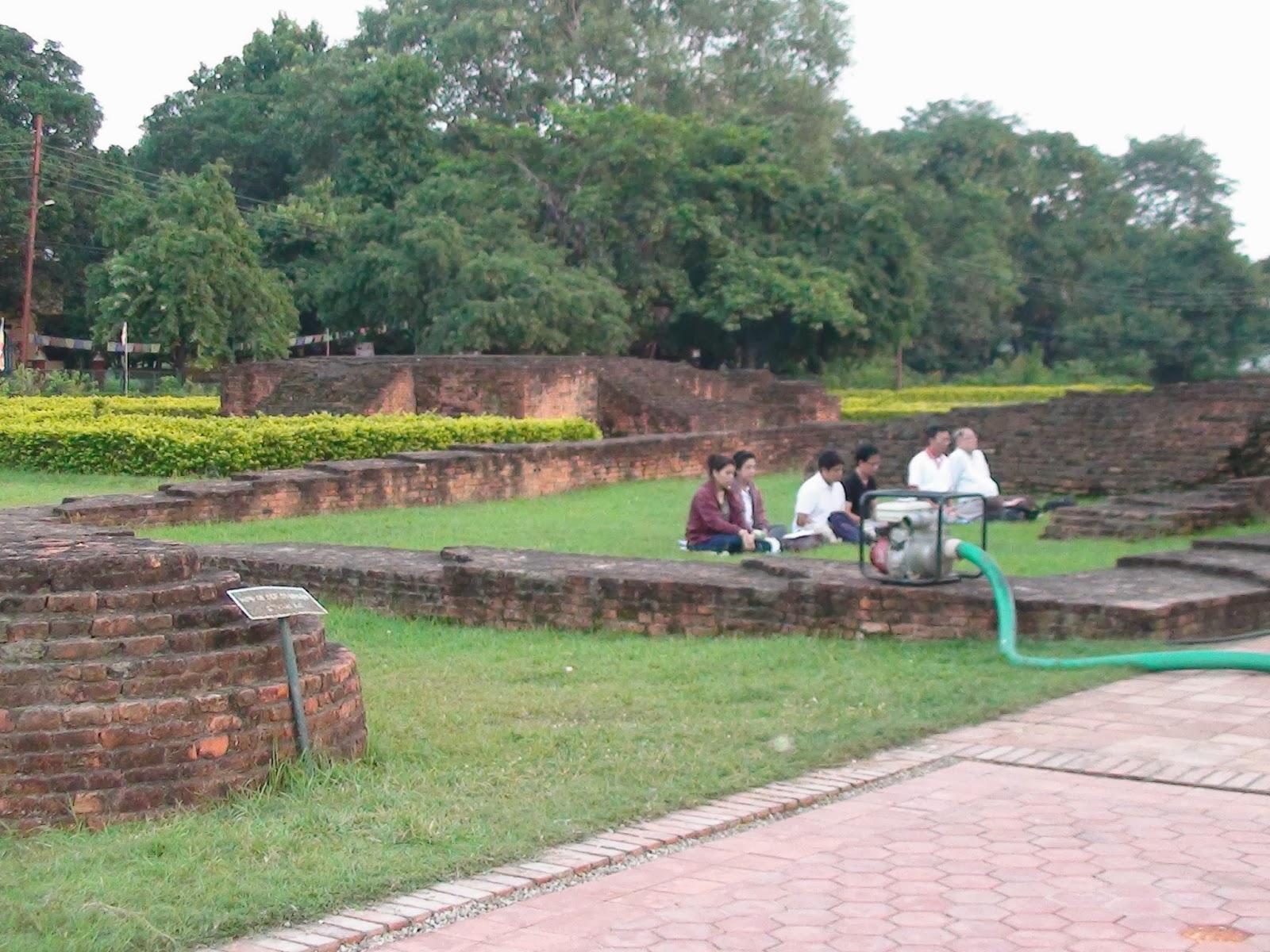
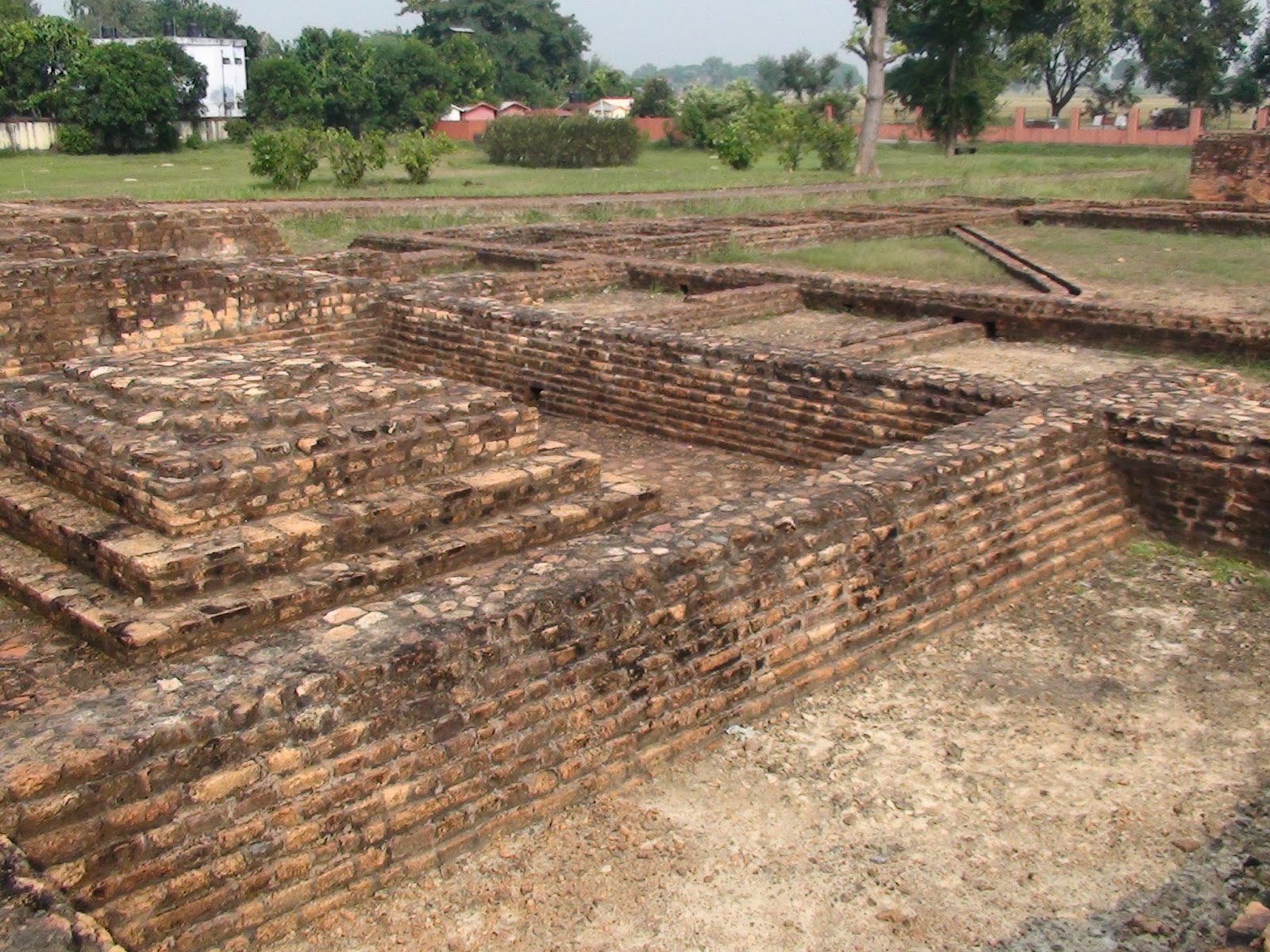
The place is maintained beautifully. It is very huge and spread out. There were many monasteries here once upon a time and the place where Buddha usually sat and meditated as well as the strip where he would take a walk are also well preserved. There is an Anadakuti and a Gandha kuti here. 
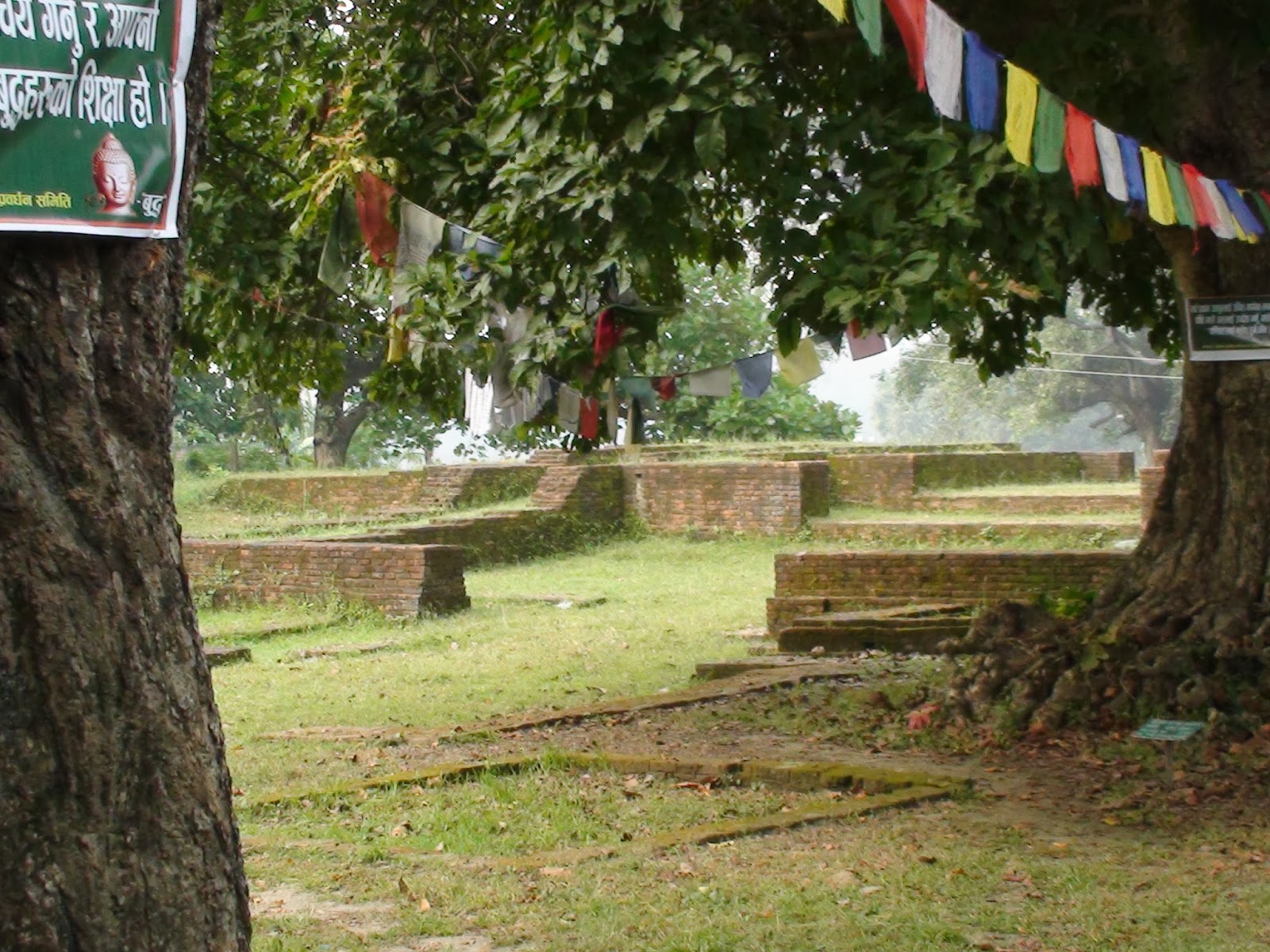
ANAND BODHI TREE
There is an Ananda Bodhi tree which is venerated. The sapling was brought from Bodhgaya by Ananda. I met the same Srilankan group of pilgrims that I had met earlier at Bodhgaya and Kushinara under the Bodhi tree. Here also they had beautified the place with flowers, flags and their silent procession. All of them were in white and devotion and peace was written large on their countenance.
BUDDHA MEDITATED HERE
After sitting inside the ruin of the little area where Buddha used to meditate, I   learnt that peace and forgiveness is the biggest weapon of all times.
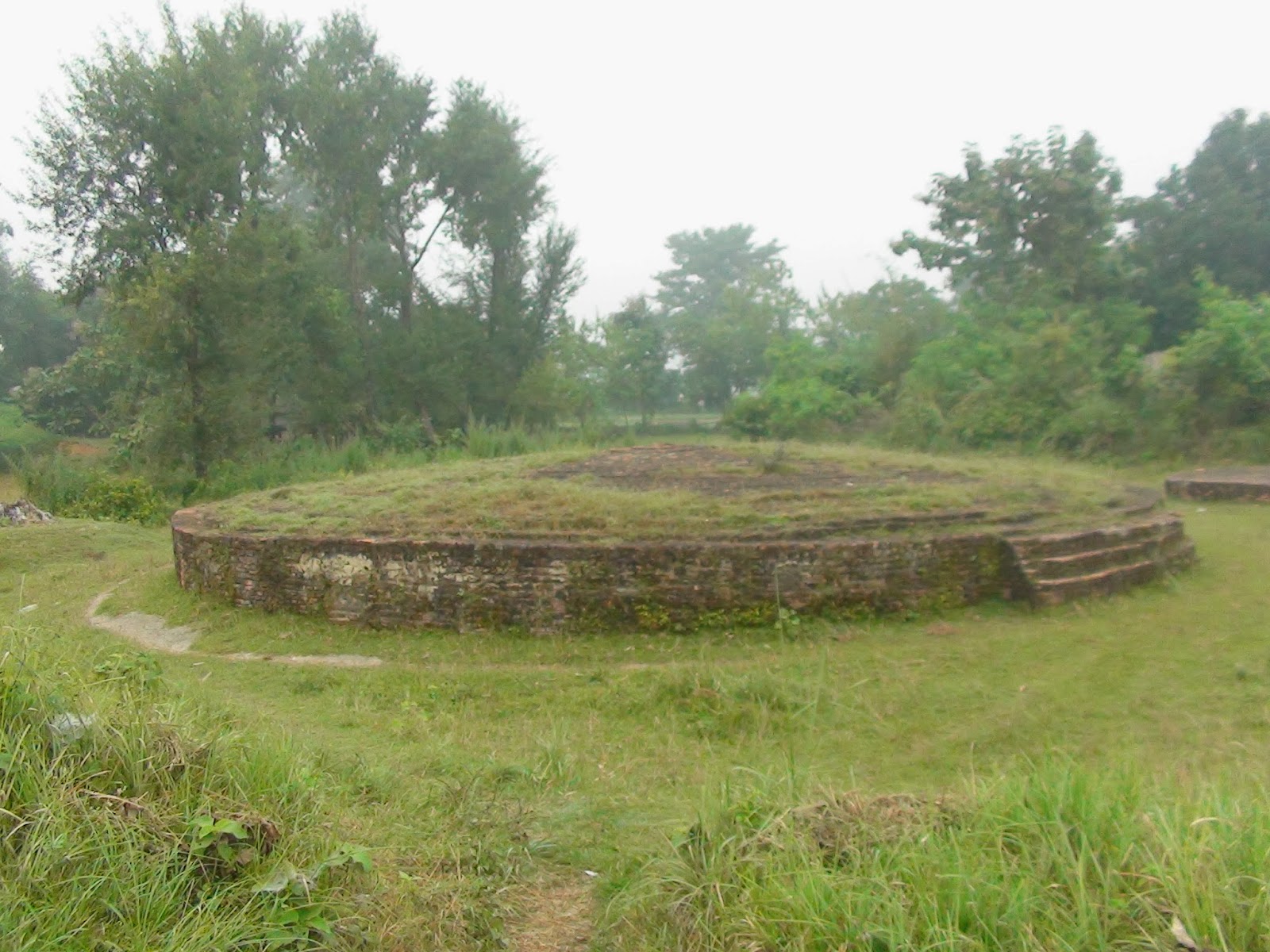
From Sahet we went to a place called Mahet where there are two stupas called the "pakki kuti" and the "kacchhi kuti". The kacchi kuti is the stupa of Anathpindika and the pakki kuti is the jail of Angulimala. 
Angulimal's prison


STUPA OVER PRISON
Angulimala it is said had studied at Takshashila, but had later become a dacoit who waylaid travelers and cut off their little finger and put a garland of the cut fingers around his neck. After meeting the Buddha, he was reformed and gave up this crime. The mound or Stupa is over Angulimala's jail.

WOMEN DISCIPLES
Vishakha the first female disciple of Buddha also belonged to Shravasti. She was married to Punnavaddhana the son of Migara, a rich but miserly merchant. She was the daughter of Dhananjaya and Sumanadevi who originally belonged to Magadh, which was a prosperous place where there were a number of shreshtis. Dhananjaya the son of Mendeka of Magadh therefore shifted to Shrawasti in search of better opportunities. Vishakha was the daughter of this Dhananjaya. Vishakha built the Pubbarama Monastery, where Buddha spent six years of varshavaas. She was a wise lady and devoted to the Buddha, and was quite influential. 


MONASTERIES AT THE BACK & A TEMPLE
King Prasenjit or Pasenadi as he was then called built the Rajakarama Monastery. Pasenadi had studied at Takshshila too and was married to a Princess of Magadh. His own sister was married to King Bimbisara of Magadh. Pasenadi was very devoted to the Buddha but wondered how Buddha had become enlightened at such a young age. At this the Buddha had told him not to doubt  a noble warrior, a serpent,fire and a bhikku, because an enraged warrior may cause harm, the bite of a serpent may kill, a small fire may turn into an inferno and a young Bhikku could also be enlightened. Pasenadi's daughter Vajira was married to Ajatshatru. In those times too there was movement for the sake of business, education as well as marriages!
MODERN TEMPLES
Near these ruins and stupas of Sahet and Mahet, there are beautiful temples built by the Srilankan, Chinese, Myanmarese and  Thais. Close by is a huge bell donated by the Japanese.

ANATHPINDIKA'S STUPA AT MAHET

Shravasti is quite close to Lucknow and the road via Balrampur is good. 

ACHIRAVATI THEN…RAPTI NOW.


Tuesday, February 4, 2014

LUMBINI GAVE US THE LIGHT OF ASIA

THE PUSHKARNI TANK AT LUMBINI
After seeing the place where Buddha died, my next destination was the place where he was born. We had to cross into Nepal. One does not need a Visa, but have to cross the border where a few formalities are completed. We crossed from Sunauli. People on foot or cycle can go across without any restriction. In fact it was as if they were going across an old time Railway Crossing with the barrier down. People were walking and shopping for daily needs from the Indian side. One more interesting information is that Indian notes of Rs. 500 and Rs. 1000 cannot be used in Nepal, they accept Rs. 100 notes.
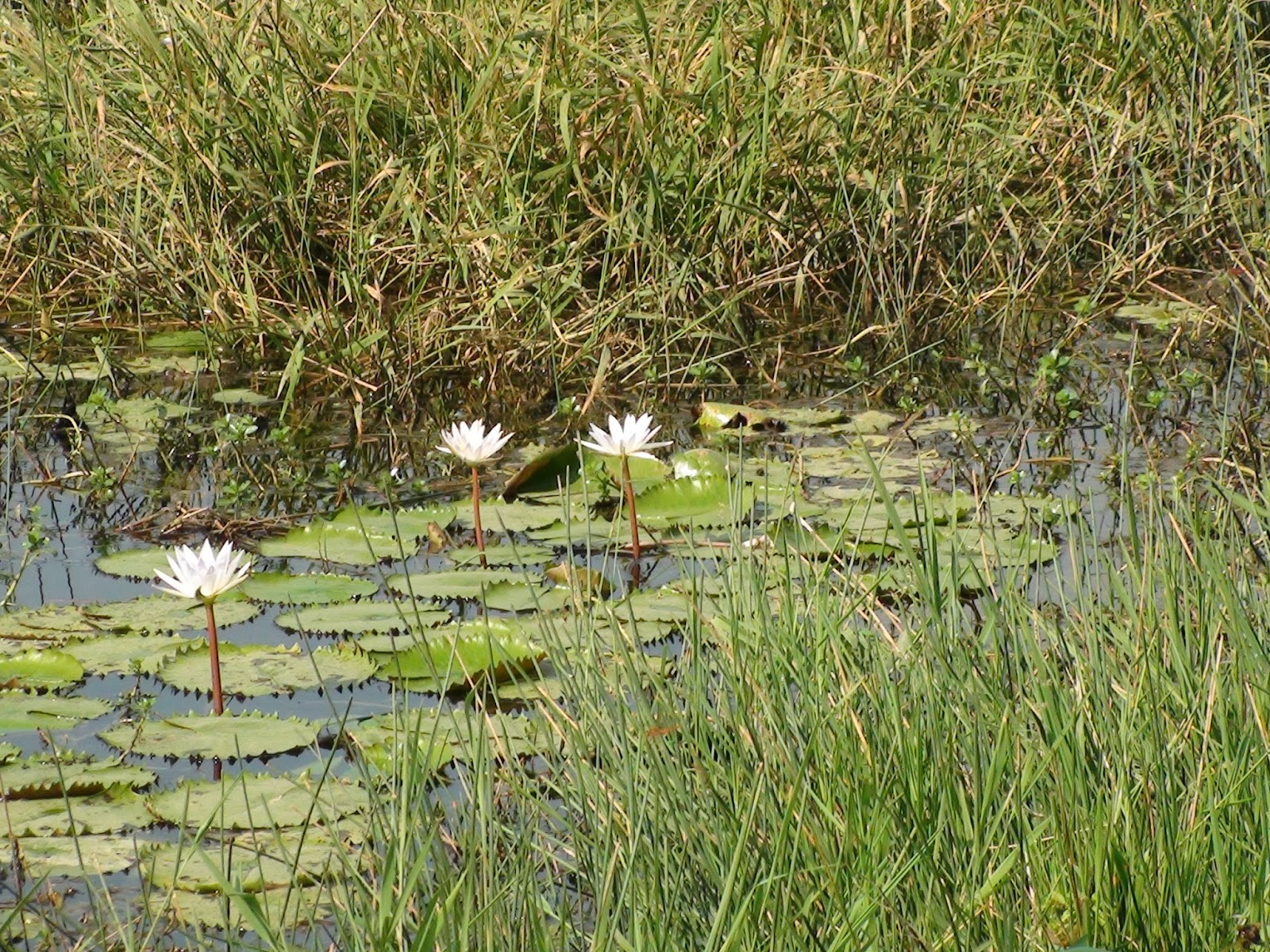
FLOWERS
Once inside Nepal driving towards Lumbini we saw ponds all along the roadside. The ponds were full of lilies and lotus flowers. It was a lovely sight.
We reached Lumbini where there is a huge park. Sign boards were quite inadequate and not clear. One had to ask for the gate from where one could enter the spot where Siddharth Gautam was actually born.
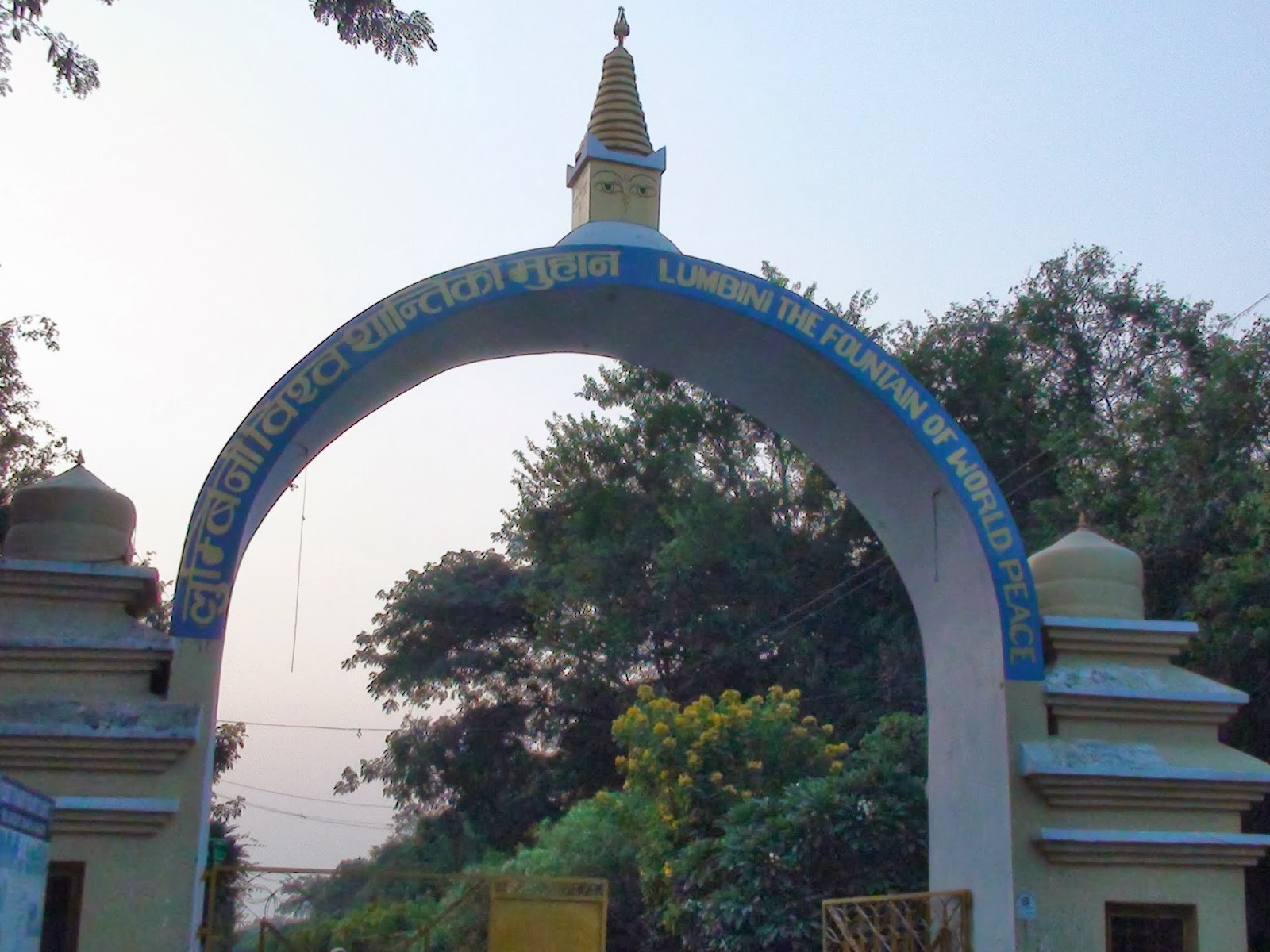
GATE AT LUMBINI

 We were directed to enter from Gate number 4 and walk as cars were not allowed inside. The garden is nice and well maintained. To maintain the sanctity of this place only monasteries can be built in the enclosure .   Shops, hotels or restaurants are not allowed here. 
MAHAMAYA TEMPLE
There is a temple built over the exact spot where Gautama was born. There was a long but orderly queue which went up to the exact spot. One could stand peacefully  as long as one wished to. There was no jostling, no pushing or remarks passed. Every one waited for their turn patiently. After all, everyone had come from far away to see the place, so everyone was allowed freedom to stand as long as one wished to.
The exact spot is covered with glass and one could see the stump of a tree which may have stood there 2500 years ago. It is said that Mahamaya the queen of King Shuddhodhan, left Tilaurakot, the capital of Kapilvastu and was on her way to her mothers place in Devdaha, when she stopped at Lumbini Garden and her child was born under a tree. There is a pond nearby called Pushkarni where Mahamaya is said to have taken her bath.There are a lot of ruins of ancient monasteries, stupas and layers of brick structures in the area from the 3rd century BC. which shows that the place around the Maya Devi temple had been venerated from early times.
I remained in the complex for a long time and actually went upto the exact spot three times as I wanted to have my fill of the place.

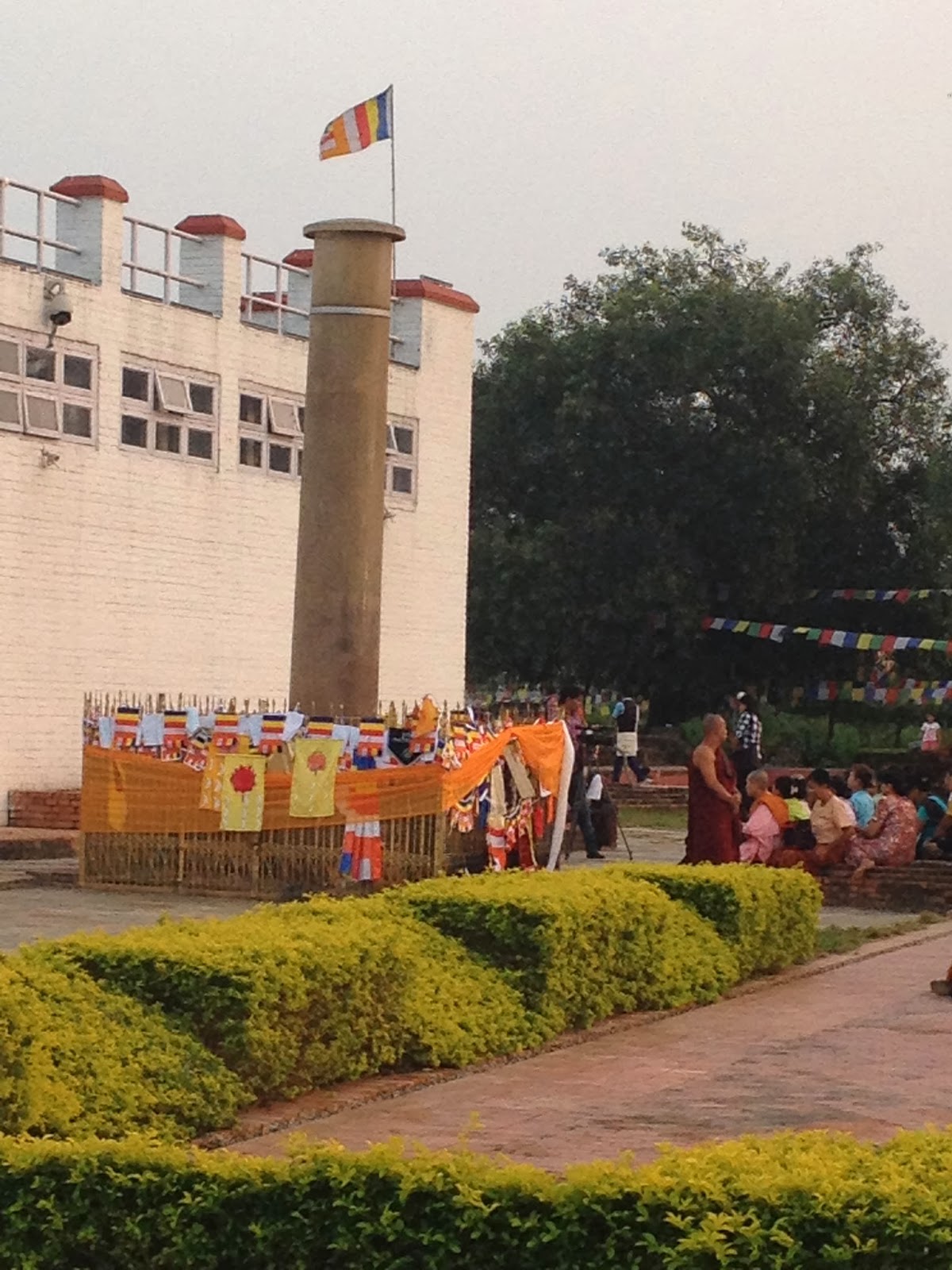
ASOKA'S PILLAR
There is an Asoka Pillar also just outside the temple premises where a lot of people were sitting and meditating.


PATHS
When we started on our way back it was dark. Street lights were lit, but in the absence of any sign board we kept turning into wrong lanes. There were not many people on the path chosen by us, so reaching back was more of an adventure trip. The hotel where we stayed at Lumbini was quite nice. Food too was good.
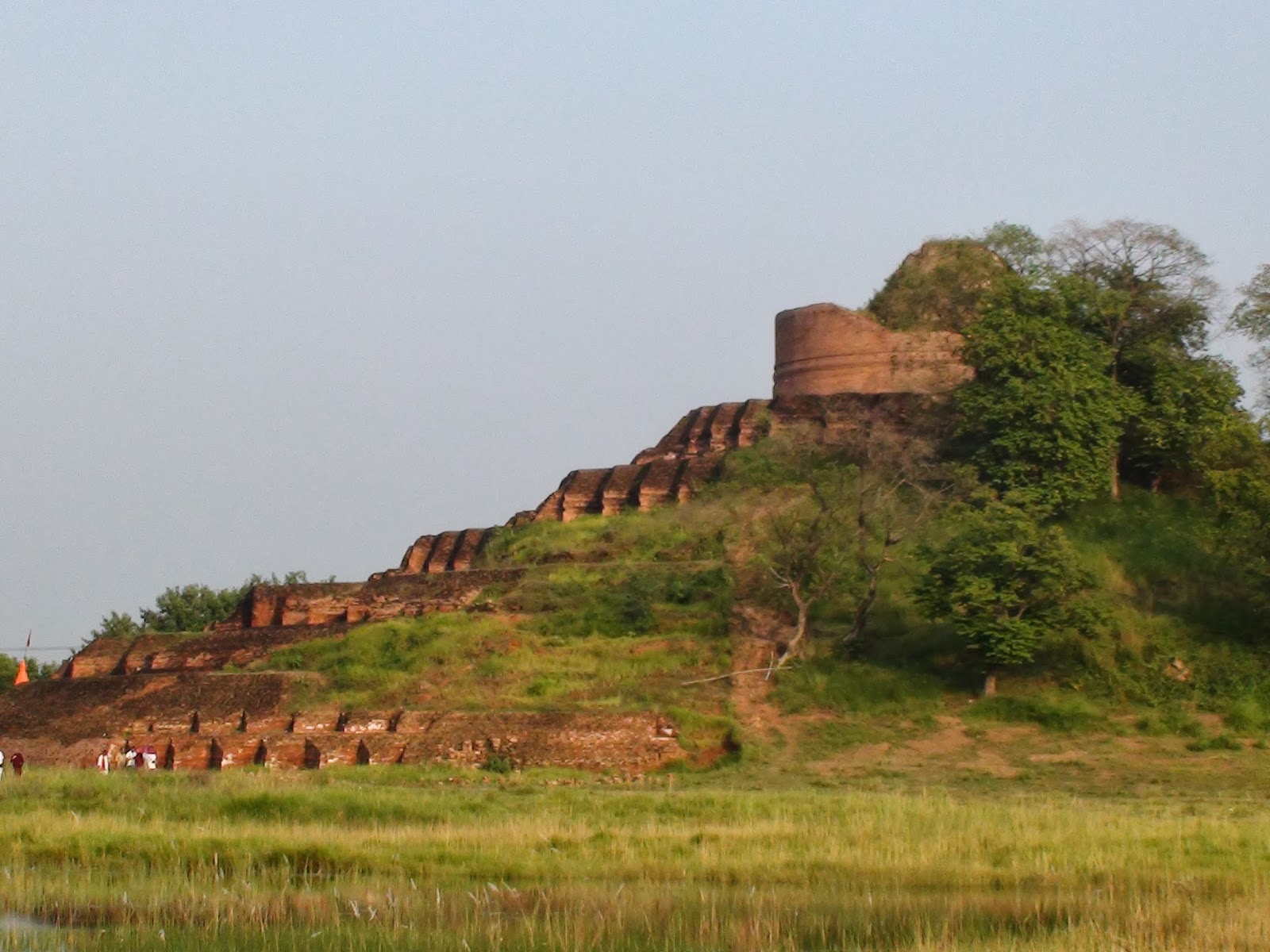
SHUDHODHAN'S CREMATION PLACE STUPA
Having had my fill of Lumbini we proceeded to Tilaurakot, where there are ruins of the palace said to have been the place where Siddhartha spent 29  years of his life. The ruins are of two gates, and palaces. The place is not maintained very well. We went to the East gate from where Siddhartha is supposed to have left the palace. He went up to the River Rohini from where he sent his chariot back. His horse it is said returned but did not enter the palace gates. He died just near the gate.
PIPRAHWA -KAPILVASTU
In India in UP at a place called Piprahwa, ruins of palaces have also been found. Claims are being made that this is the real  Kapilvastu. We visited Piprahwa too. The Indian side of Kapilvastu is maintained very nicely. The gardens around the ruins are beautiful. 
We  had an adventure trip while leaving Kapilvastu and trying to reach Piprahwa. There is a border post just South of Kapilvastu  near Aligarwah,from where one could enter Piprahwa, but from this border only two wheelers could go across. We therefore had to go about ten kms. away and then leave Nepal from Khunwah border. Reaching Piprahwa was quite tough, as we had to travel another 30 kms. to reach Piprahwa which was in fact just across Aligarwah border. 
 
TILAURAKOT NEPAL'S KAPILVASTU

Tilaurakot and Piprahwa are quite close to each other and there is only the border dividing them both. It is therefore quite possible that the claims of both the places are correct. Both have ruins of palaces and both could have been one big City.
In those days marriage between close kin was permitted, as it is interesting to note that Shudhodhan was married to his paternal aunt's(bua's) daughters Mahamaya and Prajapati Gautami. Yashodhara the wife of Siddhartha who was also called Bhaddakaccana was also his maternal uncle's(mama's) daughter.The women were from the Koliya clan and men were from the Shakya clan. Devdaha was the capital of the Koliyas and Tilaurakot was the capital of Kapilvastu. They were both vassal states of Kingdom of Kosala. Tilaurakot is 27 KM west of Lumbini and Devdaha is 35 Km North East of Lumbini. 
Both these places were Gana Rajyas.  Shudhodhan was an elected Raja. There used to be a Santhagara where general assembly of old and young men of a  clan met and decided matters of general and state affairs. These Santhagaras ( santha means group and agar means house or assembly place) of Republic states would control relations with other states,and matters of war and peace. Amazing, isn't it that we have retained a few words from the 6th Century BC, like "Bharat Ganarajya!"   


Thursday, January 30, 2014

THE FINAL DESTINATION OF BUDDHA- KUSHINARA

SRILANKAN PILGRIMS IN FRONT OF THE TEMPLE
In 483 BC, Buddha chose Kushinara now called Kushinagar as the last place that he would live in. He announced at Vaishali that he was leaving Vaishali for ever, then at Kesaria he gave his begging bowl to the people of  Vaishali and asked them to go back to their own town and not grieve for him.
Kushinagar is in UP near the river Hiranyavati. The place is not far from the Nepal border and also Kapilvastu to which place Siddhartha belonged. Reaching it was quite a tough job. The distance from Kesariya was hardly 124 kms, yet it took us over five hours to reach as the road was in a very bad condition. In some places I did think that perhaps walking would have been a wiser option!
During the days of the Buddha,the Mallas were the rulers here, and this place was one of the sixteen Maha-jana-padas of 6th century BC.
THE TEMPLE
As one enters the small town, the first place one sees is the Parinirvana Temple. This is the exact place where Buddha died. As the story goes Ananda his disciple was not very happy and the Buddha told him "Don't grieve, Ananda!  The nature of things dictates that we must leave those dear to us. Everything born contains its own cessation. I too, Ananda, am grown old, and full of years, my journey is drawing to its close, I am turning 80 years of age, and just as a worn-out cart can only with much additional care be made to move along, so too the body of the Buddha can only be kept going with much additional care".

THE SERENE FACE

The present temple at the parinirvana spot was built by the Indian Government in 1956 as part of the commemoration of the 2,500th year of the Mahaparinivana or 2500 BE (Buddhist Era). Inside this temple, one can see the famous Reclining Buddha image lying on its right side with the head to the north, facing the west. The statue is 6.1 m long and is made of Chunar sandstone. This statue was made in the 5th Century AD.
THE RECLINING STATUE
On reaching Kushinara,I went inside the temple and sat in a corner.The thought that 2500 years ago the great Buddha lay down here to die was very over whelming.
On the next morning of our stay I again visited the temple early in the morning. A whole procession of Buddhists from Srilanka were circambulating the temple. They were holding lit candles and lotus flowers in their hands. It was a silent procession. Every one was wearing white. This was the same group that I had earlier seen at Bodhgaya. They were on a  pilgrimage to visit all the places connected with the life of the Buddha.
PILGRIMS FROM BENGAL
There was another group of devotees from Bengal. They were accompanied by their Bhikhu. The Devotees sat and listened to the discourse given by the Bhikhu. They too were traveling to all the places connected with the life of Buddha. 
THAI PILGRIMS
I spent a long time inside the temple and watched as the various groups of people brought in long cheevars(cloth) for the Buddha. They would keep the cheevar on the statue  and move on. These cheevars were in golden colour and were very beautifully decorated. There must have been at least 15 cheevars donated by the Srilankans. Once they had gone then came the Thai devotees. They were fewer in number, but they too offered the Cheevar and then sat down to pray.
RAMABHAR STUPA
After the death of Buddha, he was cremated at the bank of the river Hiranyavati. A stupa was built over the place It is now called the Ramabhar Stupa, earlier it was called Mukut-bandhana Chaitya.
The ashes were then collected and divided into eight portions. The claimants of the ashes were  Ajatshatru of Magadha, Licchavis of Vaishali, Shakyas of Kapilvastu to which clan Siddhartha belonged, Bulis of Allakappa, Kolis of Ramagama to which clan his mother Mahamaya belonged, Mallas of Kushinara, Mallas of Pava and the Vethadipa Brahman. All of them took the ashes and built stupas over the ashes. Later Asoka in the 3rd Century BC built 84000 stupas over the ashes removed from some of these eight Stupas and divided into smaller portions.
After visiting the Ramabhar Stupa we visited the Museum. The building is quite big but the stuff inside is just too little.
BURMESE TEMPLE
There are a number of temples built by  other countries in Kushinara. The temple made by the Burmese is located close to the Ramambhar Stupa and is quite beautiful.
OUTSIDE THE TEMPLE
The compassionate Buddha on his death bed told the assembled people not to blame Cunda who had served Buddha his last meal, after which he had fallen ill. He left us a message that compassion and forgiveness are great virtues.  Before his death he asked all the assembled Bhikhus if they had any doubts about the Dhamma or the Sangha. They were all invited to get their doubts cleared. Buddha asked them this question three times. When no one had any doubts, he said his last words, which were, "Listen, Bhikhus, I say this, all conditioned things are subject to decay, strive with diligence for your liberation".
That's me!

Leaving Kushinagar I thought about death. 
Death is only the culmination of the journey of this body. What lives on is the memory of what a person did during this journey. How many people did he /she reach out to. 
What legacy did he/she leave for humanity. What difference did he/she make to the world which he inhabited. Did his/her existence bring a smile on the face of  people whom he touched. 
Will people remember me  long after I am gone? 
Buddha the great teacher died at Kushinara about 2500 years ago, but his thoughts, philosophy, live on trying to make us all better human beings. In a world ridden with war, strife, disparity and discrimination his message of peace, compassion, kindness, equality are eternal solutions for all times to come. 


Tuesday, January 21, 2014

THE MOST BESOTTED VAISHALI.


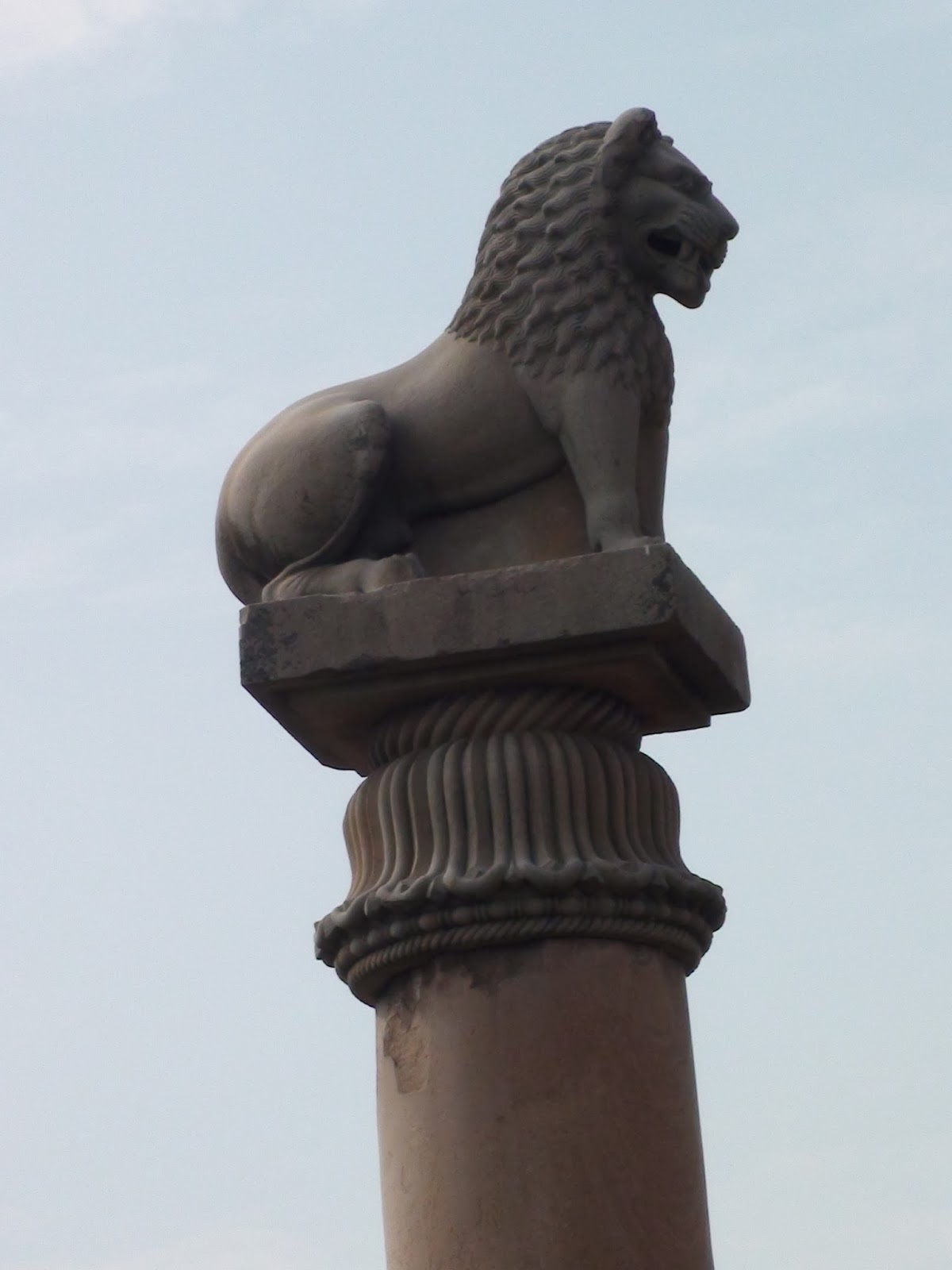
COMPLETE LION PILLAR AT VAISHALI
 In those days, around 2500 years ago, in the fertile land of the terai(wet land), where huge rivers like the Ganga, Gandak, Sone, Pun pun, Ghaghra, Kosi flowed, there was a sort of Democracy practiced, which was called Ganarajya. Gana means clan and rajya here means rule.The ruler was elected for a year. He was elected by 7707 Rajas and had a Council of nine people to assist him in administration. These rajas were male heads  of families belonging to the Kshatriya clan. Interestingly around the same time in 507 BC, an Athenian leader Cleisthenes introduced a system of political reforms that was called demokratia or Rule by the people. Here too the ruler was elected by male citizens of Athens who were over the age of 18.
There were 16 confederacies in North India then and the Vajji Mahajanapada had its capital at Vaishali  which was the seat of the Lichchavi Ganarajya. Being in the terai region with plenty of river water which brought a lot of silt with it, this fertile land was very prosperous. When food is a plenty and all needs are met, then human race progresses and flourishes and development takes place in other aspects of life. Perhaps that is the reason why this area gave us our Historical glory, great culture and intellectual and reformative Religions. The great Buddha and Mahavira were born in this era and area.
Continuing on my journey from Patna on the path that Gautama the Buddha traversed 2500 years ago, while crossing the mighty Ganga, I  looked at  the vast expanse of water with reverence as it had allowed such a great civilization to flourish here. Perhaps that is the reason why this humongous Ganga is considered sacred! So many rivers have already flown into the Ganga by this time that all the soil, and culture seems to have converged together.
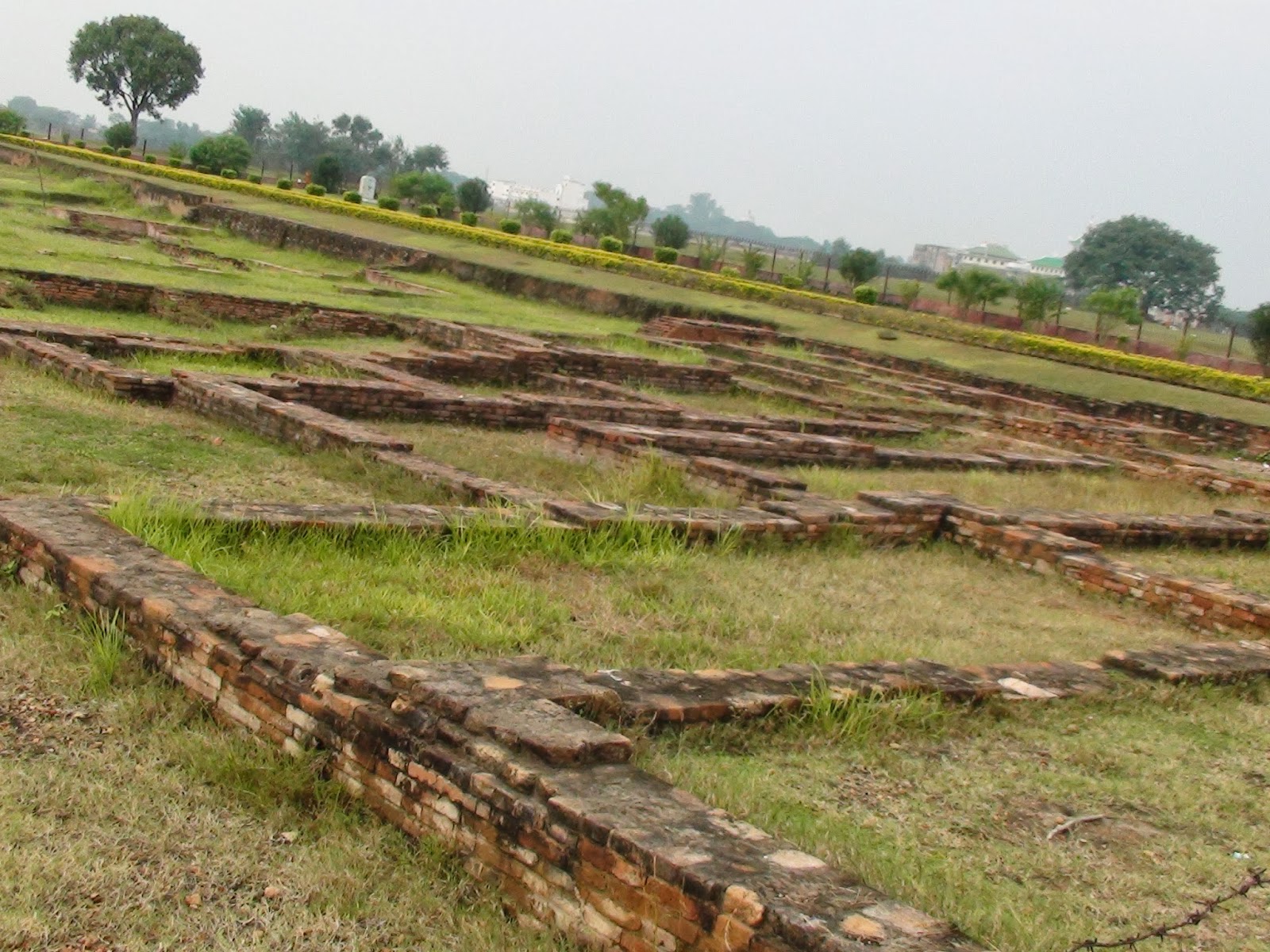
KING VISHAL'S PALACE- RUINS
After crossing the Ganga, I reached one of the most important cities of ancient India "Vaishali". Today Vaishali is just a bit bigger than a small town of rural India. All that might, beauty and  glory that it once possessed has vanished. Time has taken its toll and what once was a much coveted City and where Buddha stayed and preached for many years, no longer wields the power it did once upon a time!
This was the place where King Vishal ruled. There are some ruins where one can see what once must have been very glorious. If Bimbisar and his son Ajatshatru of Rajgrih wanted to conquer Vaishali there must have been something worth conquering here!
This was the place where the most beautiful girl of the Region was made the Nagar-vadhu or Bride of the City! What a sad state of affairs! The most beautiful girl would be chosen, would be trained in the arts of music and dance, but she would also have to be the courtesan who would have to be the bride of  anyone who could pay her price. Amrapali was one such City bride. It is said that this tradition was started by King Manudev of the Lichchavi clan who wished to possess Amrapali and therefore set up this practice as Amrapali wanted to marry someone else.The village of Ambada Chowk is  the place where Amrapali lived. A Girls School is built upon the place where it is said once lived Amrapali.  Amrapali had become a disciple of the Buddha and had renounced the World and joined the Bhikhshu  Sangha.
THIS CONTAINED RELICS OF BUDDHA NOW OPEN
As we moved away from the ruins of the palace of King Vishal, we reached the pond where the Abhishek or anointment of the King was done every year. Near by is the Stupa where the relics of the Buddha were preserved. This Stupa was opened by Asoka in the 3rd Century BC. The Relics were removed and smaller portions were distributed all over India where it is believed that 84,000 Stupas were built over the distributed relics.
 Vaishali was the place where at the age of 80, Buddha gave his last discourse and declared to the people that he was departing from Vaishali and would soon be leaving the world forever. The people of Vaishali were very upset at this disclosure and kept following him on his journey away from Vaishali. The Buddha then gave them his Bhiksha patra as a token and told them to return back to their homes.
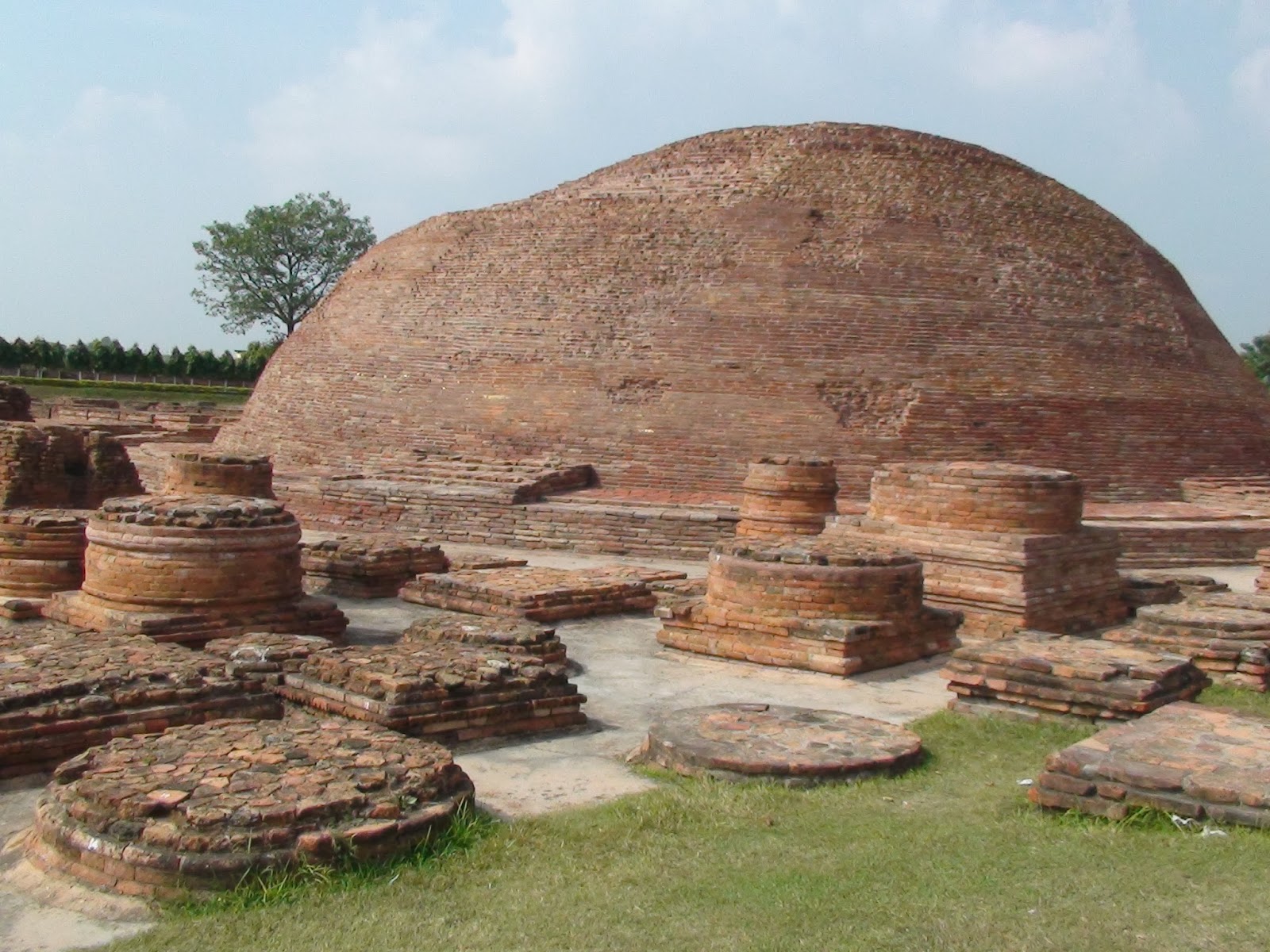
STUPA OF ANANDA
As one leaves Vaishali one reaches the Stupa where the relics of Buddha's most favorite shishya (disciple) Anand are preserved. There is a beautiful Asoka Pillar here with a sitting Lion on the top. Thankfully this is a complete Pillar and not broken or damaged.
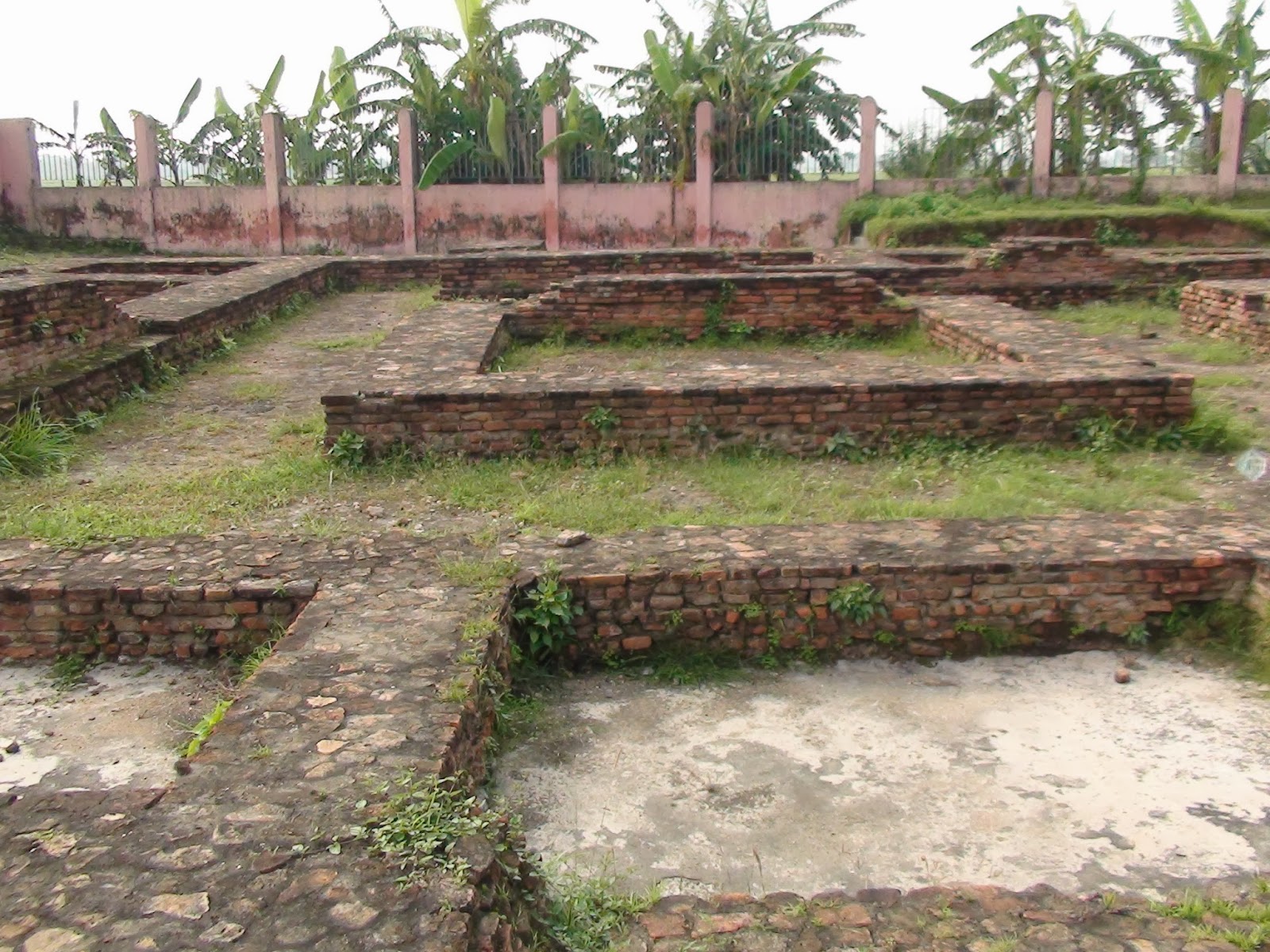
SWASTIKA SHAPED MONASTERY FOR WOMEN
There are also the ruins of a monastery in the shape of  a Swastika. Vaishali was the place where Maha Prajapati Gautami, the step mother of Siddhartha who had brought him up, asked Buddha to allow women to join the Sangha. After Ananda's persuasion Buddha allowed women to join the Sangha. That was quite a revolutionary step granting equality to women!
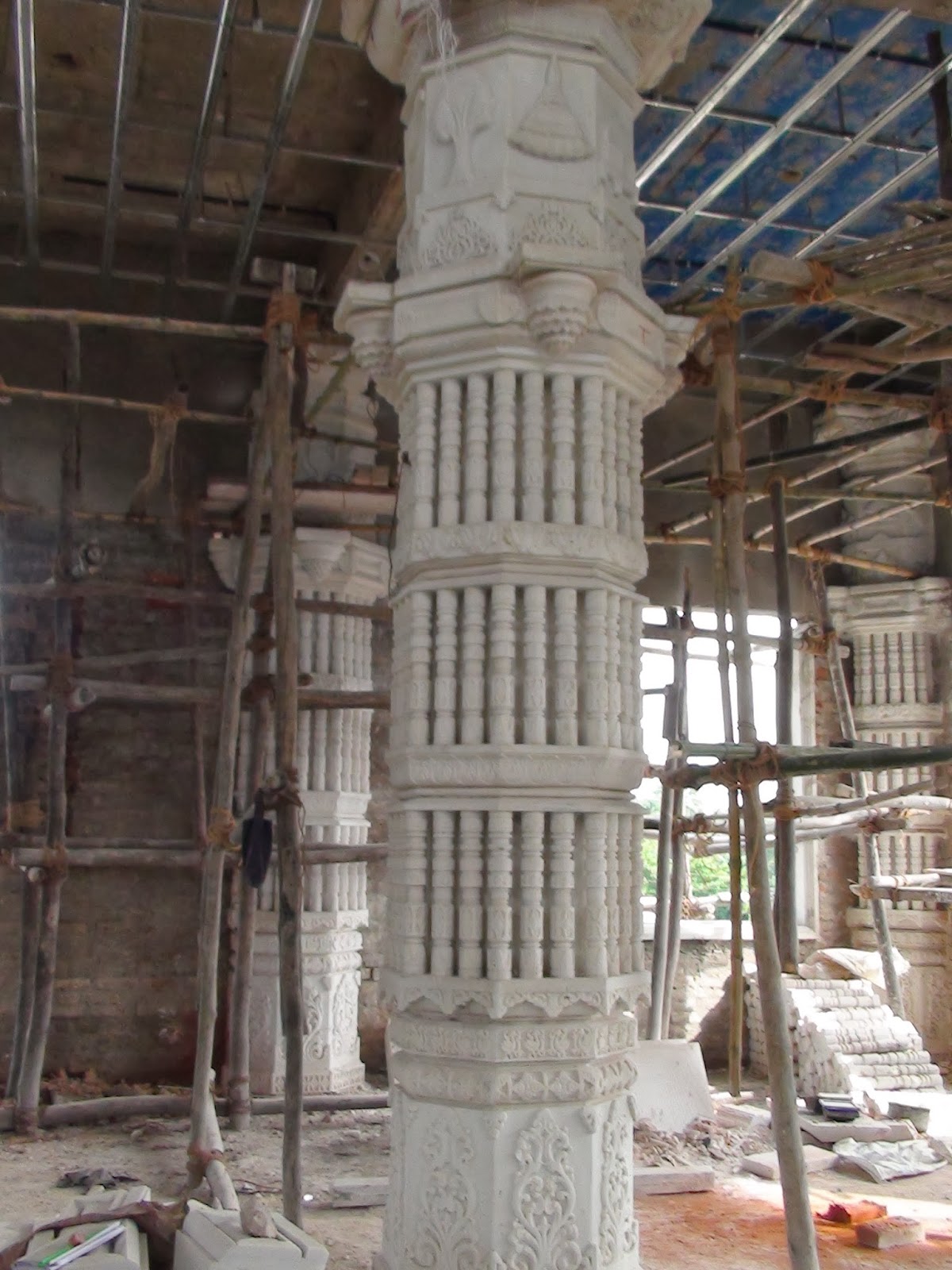
MAHAVIRA'S TEMPLE BEING BUILT AT KUNDAGRAM

 
FIVE LEVELS OF KESARIYA STUPA

Leaving Vaishali we went onwards towards Kesariya. Kesariya which was called Kessa-putta in the days of the Buddha is about 55 kms away from Vaishali. The people of Vaishali had followed Buddha upto Kesariya after his last discourse. This is the place where Buddha gave them his Bhiksha patra.
This is also the place where Buddha is supposed to have given his discourse where he had said that his followers must analyze his teachings thoroughly before accepting them, "Atta Deep Bhava". This was granting the people Freedom of thought.
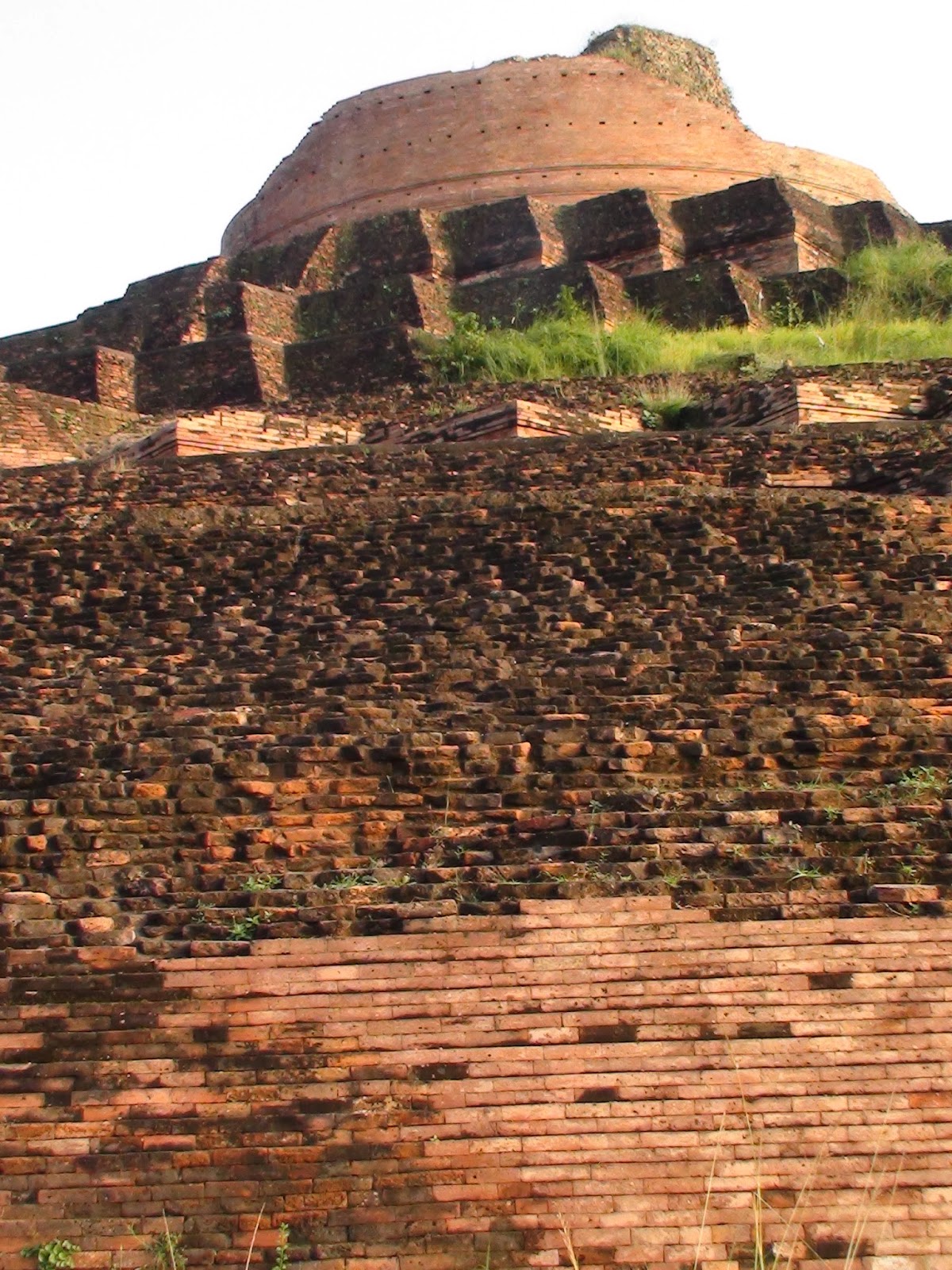
DIFFERENT SHAPES
The Stupa  here is supposed to be the largest Stupa in the world. It has five levels and each level differs in shape.  We went around half the Stupa as the other half is still under a mound. While leaving the place, as we sat near the gate, the guard asked us if we had seen the statues of Buddha. He told us they were visible from a distance and were on the north side of the stupa. We quickly went back and then could see the various niches where there were about nine statues of the Buddha. Sadly, the Khaljis in the 13th century AD, had partly destroyed these statues.


 MANY STATUES

Many people do not visit Vaishali and even fewer visit Kesariya. Both these places were important places during the life of the Buddha. They both are also important as two very important discourses of the Buddha were held here. Vaishali is also the place where the Second Buddhist Council was held 100 years after the death of Buddha, where certain rules to be followed by the Bhikhus were discussed.
THE SETTING SUN
Breathing in the air of Vaishali, walking on the road taken by the Great Teacher,I could visualize  the surge of humanity grieving at the imminent death of their beloved Teacher. The thought that they would never see him, hear him again was surely the ultimate grief. 
The Buddha had said," The whole secret of existence is to have no fear. Never fear what will become of you, depend on no one. Only the moment you reject all help, are you freed."
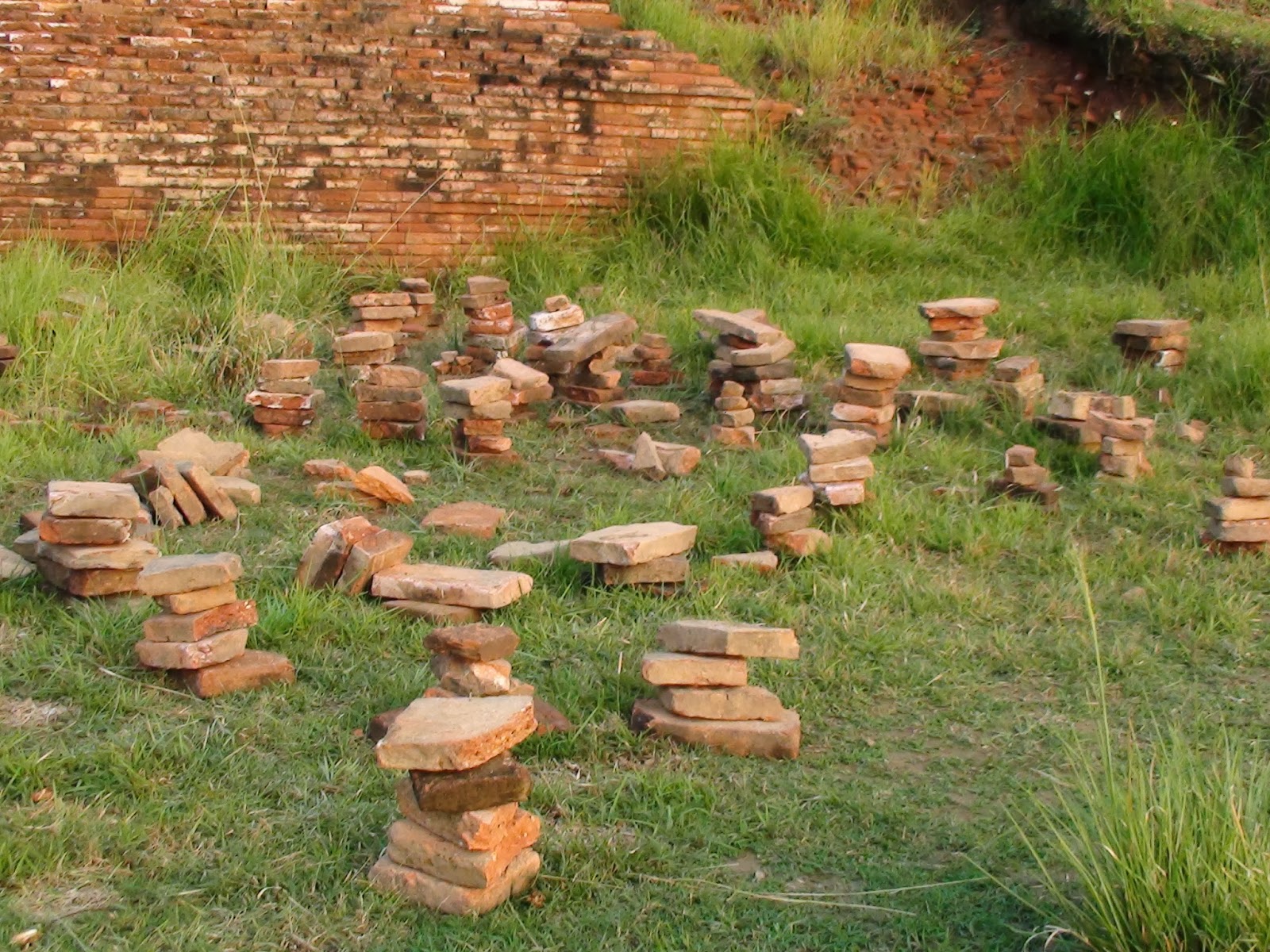
STEPPING STONES?